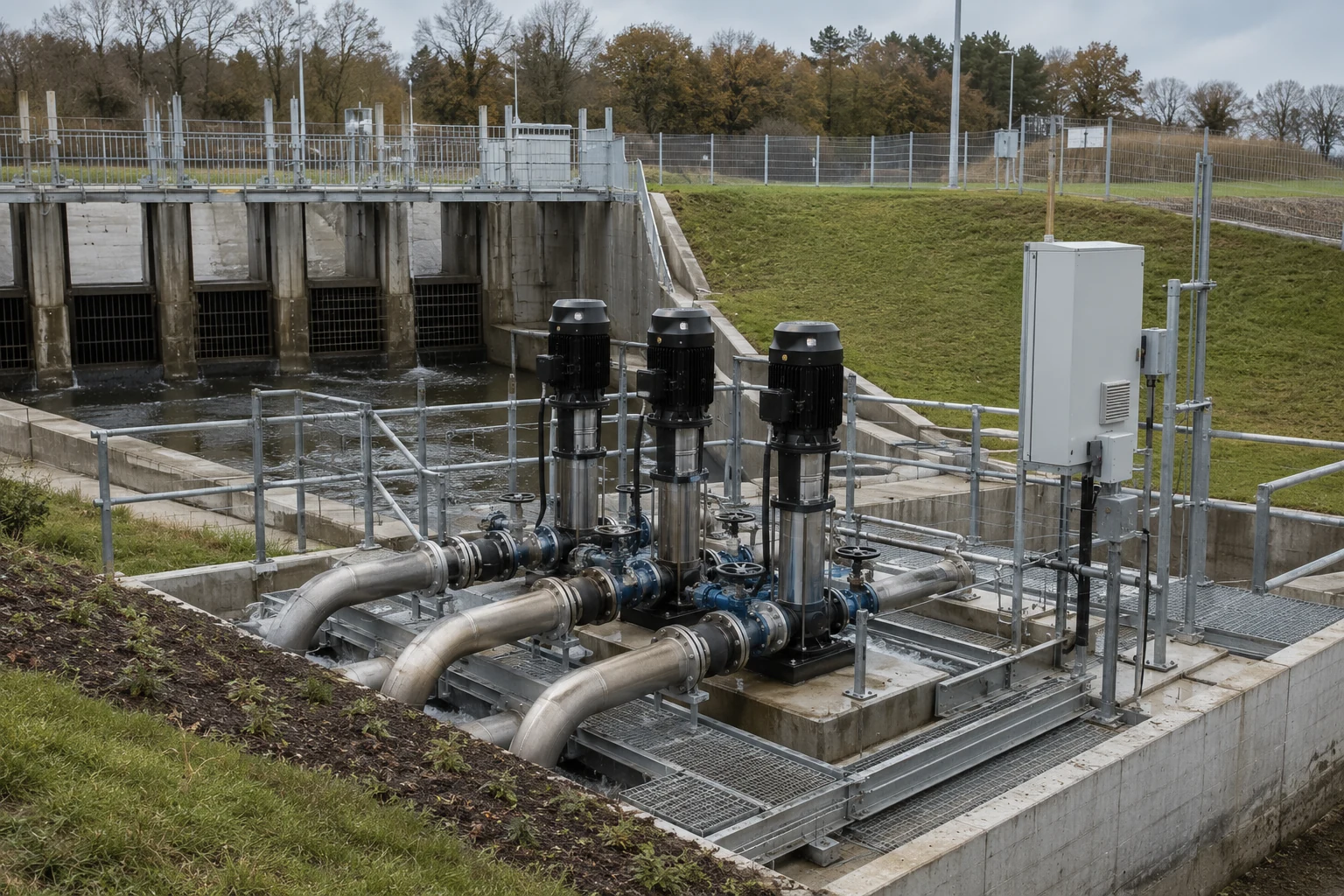
Sewage and sump pumps
Sewage and effluent pumps move wastewater where gravity drainage is not available. Sump pumps protect basements, pits and low points from groundwater or surface-water accumulation. Solids handling, chamber condition, discharge route and controls all affect selection.
Booster pumps and pressure systems
Booster sets improve water pressure and flow in houses, apartment blocks and commercial buildings. A useful assessment considers the available inlet pressure, peak demand, target pressure, storage, controls and the condition of the connected system.
Submersible and dewatering pumps
Submersible pumps can serve drainage, wastewater and transfer duties. Dewatering pumps are used to remove water from basements, excavations and other low areas. Liquid condition, suspended solids, operating depth and run time matter.
Clean-water and specialist pumps
Surface-mounted centrifugal, multistage and clean-water submersible pumps support transfer, circulation, irrigation, borehole and pressure applications. Final selection depends on verified system requirements rather than the category name alone.
Controls, alarms and complete systems
A reliable pump depends on more than the motor and impeller. Control panels, variable-speed drives, pressure vessels, level devices, alarms, valves and pipework must work together. These components can be assessed during specification, installation or fault finding.
Package systems
Need a complete pump station?
Below-ground sewage and wastewater stations require coordinated chambers, pumps, valves, controls, alarms and commissioning.
Explore pump stations ↗