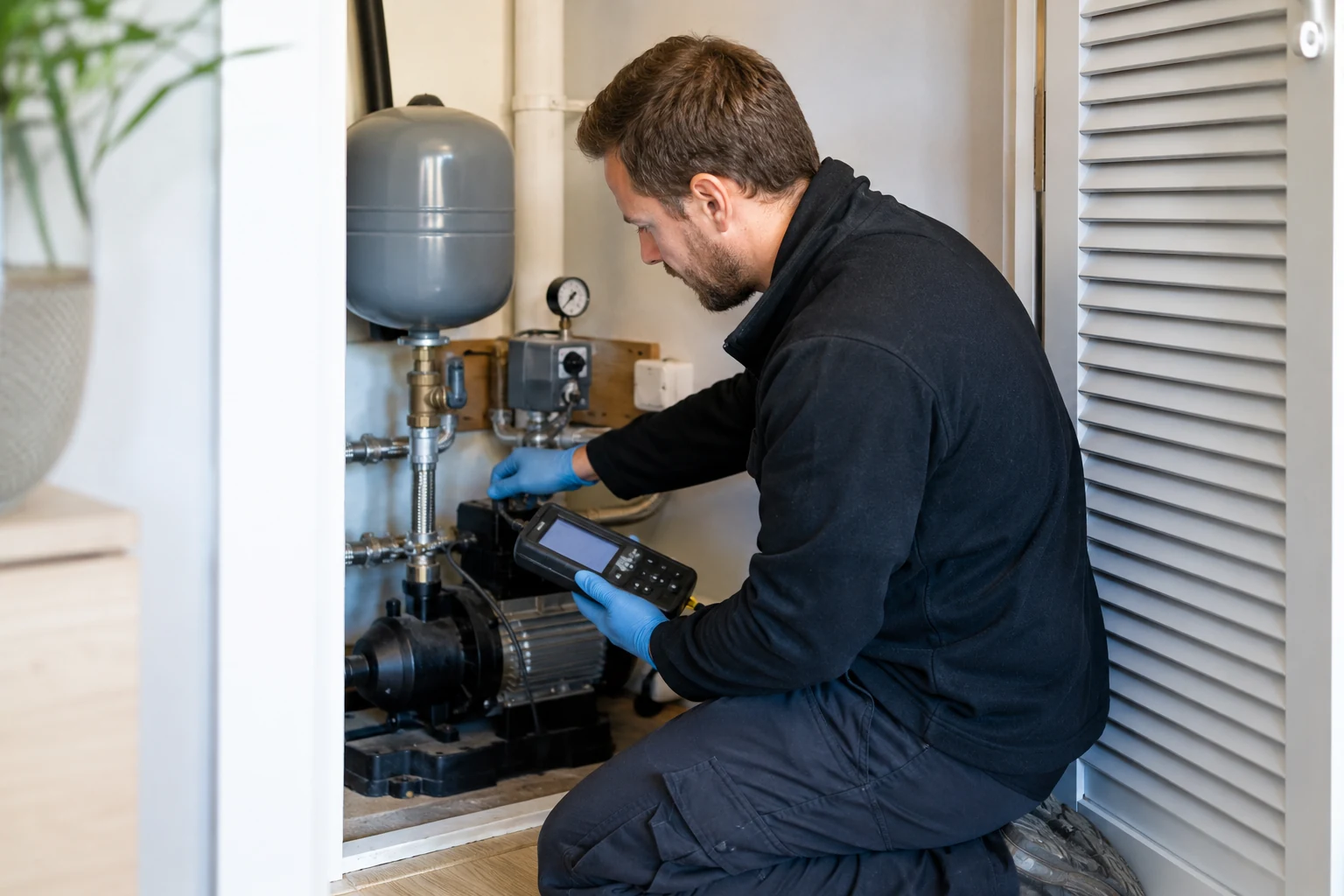
Find the cause, not only the symptom
A failed pump can be the result of blockage, worn components, a control fault, incorrect pressure settings, damaged valves, poor electrical condition or a duty the equipment was never designed to meet. The pump, controls, pipework and operating conditions should be assessed together.
Repair work can include
The practical scope depends on the pump and fault found.
- Mechanical and electrical fault diagnosis
- Cleaning and blockage removal where safely accessible
- Float, sensor and control checks
- Seal, impeller, capacitor or component replacement
- Pressure, flow and operating-cycle testing
- Clear repair-versus-replacement advice
Repair or replace?
Repair is often sensible when the duty remains correct and parts are available. Replacement may be the better long-term route when the pump is obsolete, badly worn, repeatedly failing, incorrectly sized or no longer economical to repair.
Common questions
Useful answers
What details help before a repair visit?
Send the pump make and model, rating-plate photo, fault symptoms, alarm status, site location and safe photographs of the pump and controls.
Do you repair domestic and commercial pumps?
Yes. Support covers domestic, commercial, facilities and private pump systems, subject to the equipment, duty and site access.